Lateral pressures carry out not reveal on their own with anticipation. They appear as a sluggish head in a cellar wall surface, an understated design at the top of a framed bay, or a hairline gap that stretches after a massive storm. Over time, those tiny signs and symptoms add up to use complications and also, in the worst cases, a loss of building integrity. Tieback anchors as well as their helical relatives solve that problem at the source. They interact steady dirt or even stone outside the breakdown zone and draw a structure back right into balance. When designed and also mounted accurately, they are quiet performers that extend the lifestyle of preserving devices, cellar walls, and also whole entire buildings.
I have actually watched tiebacks rescue aging business properties where street developments pressed brand new loads in to aged foundations, as well as where excavation for a neighboring task left behind a wall structure unbraced. The typical thread in productive outcomes was actually not a specific item yet good judgment in soil analysis, cautious tons screening, and practical expectations concerning hardness and also movement.
Where side security fails
Commercial structures face sidewise lots coming from planet stress, surcharge coming from nearby pavements as well as traffic, hydrostatic pressure, wind on below-grade define somewhat open garages, and also from time to time seismic drinking. The best usual perpetrators are unbalanced backfill and also groundwater. On a five-story hotel I observed in the Midwest, the lesser auto parking amount wall structure had been actually put against a rough backfill positioned as well quickly after the wall surface treated. Tiny straight splits showed up at the lesser third of the wall surface within a year. Files pointed to overstress from sidewise tension and poor relationship of the wall structure to the piece diaphragm. The repair work rotated on helical tieback anchor installment blended with crack injection and also a better water drainage pathway, not a more thick wall.
The natural science is direct. Ground uses side stress that boosts along with deepness. If the avoiding unit, generally a wall surface repaired at foundation as well as restricted at the top, can not counter the minute, the wall surface disperses. That curvature rearranges tension and can easily reduce demand somewhat, once gaps create and water finds a road, damage speeds up. Tieback anchors interfere by lugging flexible tons into more powerful material a greater distance coming from the wall surface, which decreases bending in the wall structure and limits deflection.
What a tieback anchor does
A tieback anchor is a pressure factor put up by means of a construct, normally at a downward angle, to move load coming from the design to the dirt or rock mass responsible for the energetic wedge. The support has 3 important parts: the connect zone installed in capable strata, a totally free duration that flexes elastically to make it possible for tensioning, and also a scalp that attaches to the framework. When preloaded, the support develops a supporting power that counters energetic the planet stress. The support performs certainly not eliminate stress, it bypasses the susceptible wall structure through attaching it to a much more reliable load road in the ground.
Helical tieback anchors utilize helices welded to a central shaft to generate capability as they are actually screwed in to the ground. The setup twist correlates to capability, which delivers immediate responses. Grouted tiebacks establish capacity by bonding to the soil via cementitious grout. Each devices possess a part. Helical anchors excel in coarse-grained or cohesive grounds where twist can be developed and mobilized rapidly, as well as they beam when accessibility and also vibration restrictions are tight. Grouted tiebacks usually make good sense in sands and also rocks at sharpness or when a rock connection region is needed.
When helical tiebacks are actually the appropriate tool
On infill websites along with inadequate accessibility, helical tieback anchor installment could be carried out with fairly tiny, low-clearance tools. A professional workers can mount anchors from inside a building without removing slabs. At a distribution center in New Jacket, we maintained a 140-foot extent of accepted foundation wall surface without interfering with procedures. Supports were set up coming from the interior, tilted beneath pallet shelfs, and also tensioned versus new waler light beams at the wall face. The helical tiebacks paired with a boundary drainpipe decreased hydrostatic pressure and gave the wall surface a trustworthy counterforce.
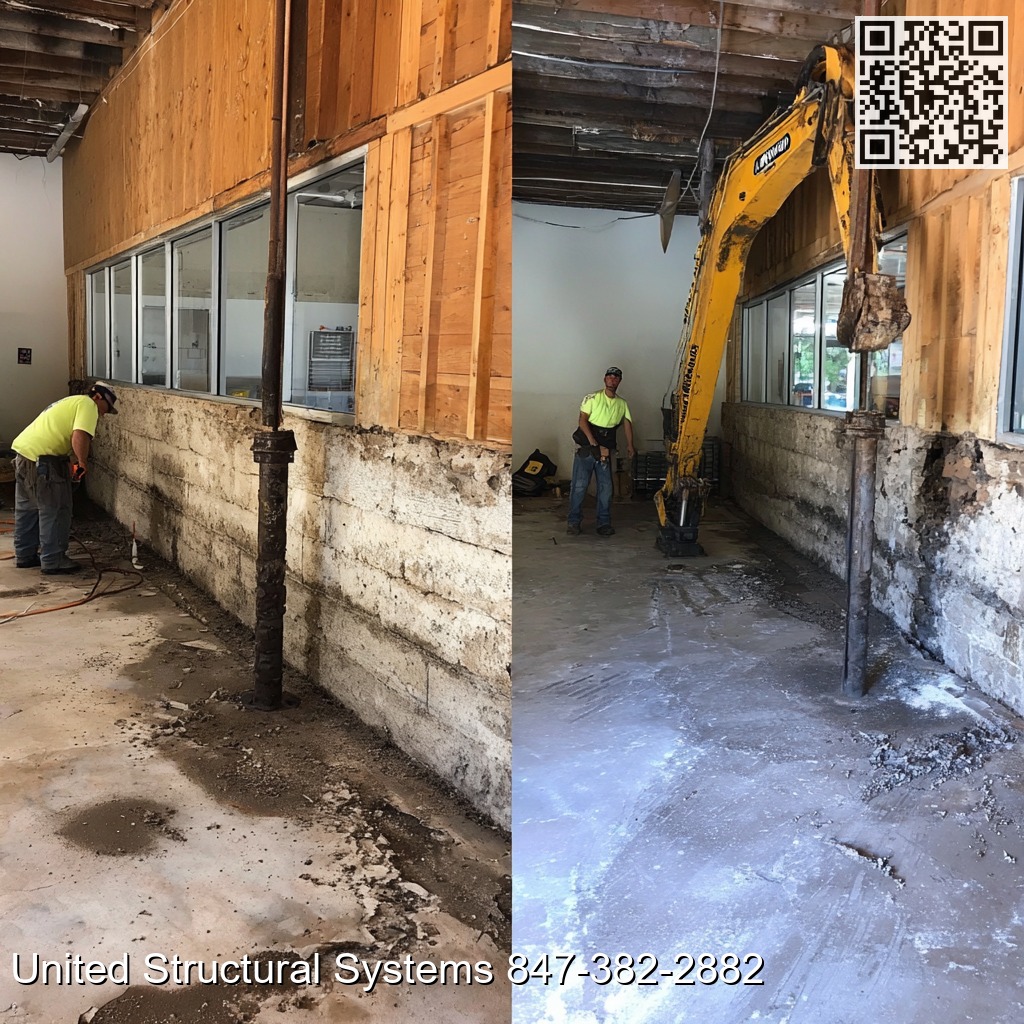
Helical supports likewise function effectively when the routine may not fit cement remedy times. The correlation in between torque and ability enables proof packing the exact same day. For unexpected emergency commercial foundation stabilization, that speed issues. If a wall is actually relocating and you need to halt progression just before the upcoming rain, helical tiebacks might be actually the difference between a repair work as well as a rebuild.
Edge situations exist. Heavy gravels along with cobbles can easily disperse coils, leading to uneven placement or rejection. Because instance, switching to a punched micropile-style tieback with cement makes sense. Organic grounds and also disposal area fragments are an additional warning. You need to have to bypass uncertain coatings to discover a skilled connection area, often at greater sizes than originally organized. That is where preconstruction exam anchors make their keep.
How tiebacks interaction with deeper base systems
Lateral stabilization is seldom standalone. It links right into other base methods. A modern-day industrial property might incorporate commercial helical pile installation for vertical assistance along with helical tieback anchors for side security. I have actually likewise observed micropiles hold gravitation bunches while helical anchors took care of overturning at a tall maintaining wall. Micropiles and also resistance stacks are actually great for upright bunch move through unsatisfactory dirts to stone or heavy strata, however in pure pressure laterally they have actually limitations unless assaulted or secured along with a rich connect zone.
Consider a retail container establishment built on gentle clay-baseds over weathered shale. The pillars were sustained by micropiles, pair of per column, put in to stone. The rear launching dock required a 16-foot https://www.unitedstructuralsystems.com/free-guide/ cut with a soldier pile wall. The concept made use of helical tieback anchors for the wall surface, laterally bandaging the system without transferring big loads back in to the piece. That splitting up of tasks kept the construct clean, and future piece repair services will not threaten side reliability. Micropile installation and also tieback anchors, when collaborated, permit modular repair service and maintenance.
Commercial resistance pile installation, sometimes referred to as press piers, can likewise find a place. While protection piles sparkle in structural foundation repair for negotiation, they are certainly not commonly used as main sidewise factors unless incorporated with walers and supporting. In deep foundation repair, I examine resistance stacks for vertical adjustment as well as helical tiebacks or grouted anchors for wall restriction. Combining bodies is not duplication, it is division of labor.
Diagnosing side trouble just before selecting anchors
Foundations that require tiebacks usually show very early signals: parallel cracks near mid-height, diagonal cracks at edges, bulging of stonework systems, or spalling where rebar has actually worn away coming from water seepage. Prior to any type of commercial foundation repair, map the fracture style as well as take a few elevation tries with a laser across the wall. If the curvature is focused at the facility of a panel, a tieback design with closer spacing there may be actually justified. If the top of wall structure was meant as a birth control relationship yet the support screws are corroded or missing, think about updating the hookup in tandem along with anchors. Foundation crack repair by means of epoxy treatment has the greatest market value after action ceases, certainly not before.
For below-grade wall surfaces, groundwater monitoring marks effectiveness. I have actually taken on perfectly installed tiebacks that performed their work while water continued to press by means of chilly joints and splits. The wall kept ethical, but the space kept wet and unhealthful. French empties, weeps, as well as positive drain out of the wall structure reduce the line-of-defense job that tiebacks are actually compelled to accomplish. If hydrostatic stress is higher, plan for drains pipes as well as sump ability in the exact same breathing spell as anchors.
Design considerations that create or even breach performance
Tieback design depends upon trustworthy ground data and also reasonable lots models. A guideline: if you are actually relying upon assumed soil criteria from a newspaper throughout town, you have opened the door to callbacks. Pull a handful of borings or even cone seepage tests along the wall surface alignment. Find the depth to secure material and also the presence of coatings that could creep under continual lots. Silts that appearance firm on day one might relax under long-term tension. When utilizing helical anchors, keep track of installment torque every foot to identify fragile seams.
Anchor geometry is actually more than a layout. The slant of setup, usually 10 to 25 levels listed below straight, impacts pullout performance and also the danger of facing energies. The connect area size, whether grouted or even described through helical layer pile, have to entirely develop ability. In helical tiebacks, the lead configuration issues: numerous coils spaced three diameters apart on bum rap reduce group interaction and also improve weight distribution. For grouted tiebacks, opening dimension and cement durability specify the connection capability, but therefore does exploration procedure. Extremely threatening boring may smear the borehole in clay-baseds and also lessen bond.
Load screening is actually non-negotiable. I like a plan that features at the very least one efficiency examination to failure or 1.5 times design tons, as well as proof examinations on development anchors to 1.25 times layout tons. Keep a particular eye on creep under sustained lots. A straightforward criterion, such as lower than 1/8 inch movement in 10 mins at the greatest exam tons, supplies a sanity examination. If a support creeps, reassess the connect region or switch to a different system.
Head information matter as long as the dirt. A tieback head typically bears upon a waler, commonly steel network or vast flange, that spreads the aspect lots into the wall structure. Poor waler match causes squashing or even tension focus and can telegram as brand-new splits. On a brick-infill wall surface, platters or stations supported through grout can easily soften the user interface. For cast-in-place concrete, coring a nice hole as well as making use of a hot-dipped galvanized platter along with a recessed almond maintains routine maintenance basic and also deterioration in check.
Installation truths on industrial jobs
Commercial helical tieback anchor installment succeeds when workers value the property and the next-door neighbors. Anchors installed from internal spaces call for protection for surfaces and dust command. Fit-for-purpose devices, generally a twist electric motor mounted on a mini-excavator or even skid-steer, requires enough area to cultivate torque without jumping off a cavalcade line. Where area is tight, hand-held hydraulic units can put in smaller-diameter helical anchors, but you trade velocity and capacity.
On a medical center retrofit, our setup home window ranged from 9 p.m. to 5 a.m. to prevent hampering image resolution rooms. We sequenced supports in order that just 2 adjacent anchors were actually set up at a time, staying away from short-lived reduction of wall structure assistance. Pre-staging walers and components in the day lowered sound during the helical pile foundations night. The anchors were tensioned considerably, 25 per-cent to seat, 75 percent to approach design, after that total bunch after a quick pressure inspection. That stepwise technique prevents surprise loading a brittle wall.
For grouted tiebacks, the web site has to accommodate cement batching as well as spoil control. In metropolitan cellars, that may be the restraint that pokes the selection toward helical anchors. Where cement is actually demanded for layout purposes, use a tremie pipe to place grout coming from all-time low up and observe gains. Overdrilling without casing welcomes collapse as well as polluted bond zones in soft soils. A little slip below becomes a reoccuring routine maintenance telephone call later.
Integrating tiebacks along with other repairs
Tiebacks are actually one component of structural foundation repair. They match normally with deep foundation repair methods utilized to take care of settlement deal or even bad bearing. An usual pattern in commercial foundation stabilization appears like this: assistance gravitational force loads along with helical piles or even micropiles, brace lateral tons with tieback anchors, then handle wall structure disorder with fracture treatment, patching, and also waterproofing. That purchase protects alignment and minimizes added harm during repair.
When a wall surface has cracked, foundation crack repair by epoxy shot restores architectural connection, but merely after motion is actually regulated. For moist wall surfaces, polyurethane fracture treatment can easily quit leaks just before epoxy repairs. In brickwork, carbon dioxide fiber bands can share tasks with tiebacks to confine protruding between supports. The key is actually realizing what each element does well. Helical piles as well as resistance stacks take care of vertical lots, micropiles handle upright lots where stone is centered or even get access to is actually precarious, helical tiebacks as well as grouted supports manage side lots, and also surface repair services rejuvenate longevity and watertightness.
Costs, schedules, and also what owners ought to expect
Owners inquire pair of inquiries: For how long will it take, and also how much will it cost? The truthful solution is varies along with emergencies. For a common office helical tieback project on a 100-foot wall with anchor space near 6 to 8 feet, anticipate 15 to twenty supports. With good get access to and sincere grounds, a workers can easily put in as well as stress 6 to 10 helical tiebacks every day. That produces a two to four time installment home window plus mobilization and also prep. Grouted anchors take longer because of exploration, housing, and also cement cure, typically a full week or even additional for identical scope.
Costs depend on size, ability, gain access to, and screening needs. Helical tieback costs usually drops in between the middle of four figures to low 5 bodies per anchor for office setups, along with metropolitan projects on the uppermost edge. Grouted tiebacks could be similar every anchor yet along with higher internet site logistics prices. What proprietors can count on: tasks that invest in correct inspection and also screening possess less adjustment purchases. The cheapest support that fails a creep exam is certainly not a bargain.
Common risks and also how to prevent them
The very most recurring mistake is actually treating tiebacks as a panacea without addressing water as well as water drainage. A wall structure limited by supports can easily still weaken coming from entraped humidity, freeze-thaw patterns, as well as deterioration. One more slip is overlooking geometric restrictions. Supports can encounter utilities, occupant rooms, or even future excavations. On a mixed-use project, an unskillful tieback pattern disrupted an anchor renter's prepared elevator pit 2 years eventually, as well as a number of supports must be left and replaced.
Overreliance on brochure capabilities without website proof also leads to problem. I always keep a record of installation torque, exam tons, as well as motions for each anchor, not simply the exam supports. Design arise. If torque declines all of a sudden in a region, probe additionally. It might be a buried trough, a fill wallet, or a soft seam. Conforming on the spot, with the developer interacted, maintains the project on track.
Choosing between helical, resistance, and micropile systems
Engineers and professionals typically face a three-way option one of helical piles, protection heaps, as well as micropiles, specifically when fixings require both upright and also lateral upgrades.
- Helical stacks and also helical anchors: Best when access is actually confined, resonance needs to be actually low, as well as prompt capability confirmation by means of torque is actually useful. They satisfy a large variety of grounds but struggle in incredibly thick crushed rocks along with cobbles or boulders. Resistance heaps: Solid alternative for correcting resolution under existing footings where gas ports may press heaps to rejection versus the property. They are actually predominantly upright components, certainly not lateral, unless arranged in battered pairs or utilized with walers. Micropiles: Very flexible drilled-and-grouted elements that work in limited rooms and with blockages, along with excellent functionality to stone. They hold higher bunches yet entail even more equipment and grout dealing with than helical systems.
That easy comparison conceals distinction. The fastest timetable is certainly not always the most affordable threat. A website with changeable filler may argue for micropiles and grouted tiebacks even with the slower speed, due to the fact that exploration as well as grouting may stabilize the irregularity. However, in consistent clay-based with reputable twist correlation, commercial helical pile installation together with helical tiebacks returns speed, reduced disturbance, and also tidy documentation.
A brief range story
A waterside storage facility in the Southeast possessed a keeping wall structure that bent 2 ins over 12 feets of height, pressing towards the interior. The wall structure supported to a slender alley along with electricals tied through the right of way. Digging was off the dining table. Our experts mapped utilities, then established a helical tieback pattern from the inside at 15 levels below horizontal, targeting a soft sand coating at 18 to 24 feet where test probes presented excellent quality. Walers were rolled steel networks secured with glue pegs in to the wall surface. Our team set up 22 supports over 3 nights, along with setup torques varying from 5,500 to 7,000 foot-pounds, correlating to develop lots of 25 to 35 kips. Proof exams went effortlessly, but 2 anchors showed higher-than-expected movement at tons. Ground logs presented a thin silt lens at that altitude. Our company expanded those 2 supports an added 5 feets to catch the much deeper sand and retested. Action dropped to within criteria. Six months after finalization, the wall structure stayed secure, the crack widths had actually certainly not expanded, and also the interior room remained dry after tropical storms due to a new drainpipe and also sump.
That task reinforced a lesson I relearn on every task: the ground informs you what it are going to allow, certainly not the other means around.
Quality command that spends off
Documentation is part of the work. For office tasks, always keep a total document: anchor IDs, locations, angles, sizes, coil setups or even connection sizes, setup torques or even cement amounts, test loads, and motions. Pictures of heads as well as walers after tensioning aid future staffs recognize the repair. Internet site examiners as well as designers must review the first many supports in person, then at reasonable milestones. These routines sound authoritative up until the time a packing dock roofing system addition changes surcharge onto a wall structure, and also the manager asks for the authentic capacities and variables of safety.
Corrosion protection is entitled to attention. Hot-dipped priming, epoxy layers, double oxidation protection for grouted tiebacks along with sheathing, and correct specifying at heads expand service life. On seaside internet sites or where de-icing sodiums are present, do not skimp. Define the security unit very early therefore lead times do not endanger schedules.
Bringing it together
Tieback supports are actually certainly not elegant, yet they are honest. They create a measurable assurance: administer a well-known counterforce where the structure requires it very most. When paired with smart drain, suitable deep foundation repair elements, as well as reasonable detailing, they come back control to owners and location managers that need to have structures to function day in day out. The best end results come from restrained style, clear screening, and crews that respect both the construct and also the ground. If a wall structure is actually bowing or even a cellar is actually taking on water, the correct mix of helical tieback anchors, helical piles or micropiles, and uncomplicated foundation crack repair can easily transform a sluggish concern right into a stable, expected asset.
 Ask ChatGPT
 Ask Grok
 Ask Perplexity
 Ask Claude
 Ask Google AI
 Ask You