Lateral pressures carry out not announce themselves with excitement. They show up as a sluggish bow in a basement wall structure, a subtle drift at the top of a framed bay, or a hairline crack that prolongs after a massive storm. Gradually, those tiny indicators amount to service issues and, in the most awful instances, a reduction of structural reliability. Tieback anchors as well as their helical relatives solve that issue at the source. They involve secure dirt or rock outside the breakdown region as well as pull a structure back right into harmony. When developed and put in correctly, they are actually quiet artists that extend the life of retaining units, basement wall structures, and entire buildings.
I have actually seen tiebacks saving getting older office residential or commercial properties where street developments pushed brand new bunches into aged structures, as well as where excavation for a bordering task left a wall surface unbraced. The popular string in prosperous results was not a particular item yet profundity in ground analysis, cautious load testing, and practical expectations concerning hardness and also movement.
Where sidewise stability fails
Commercial structures deal with sidewise lots from planet stress, surcharge from adjacent pavements and also visitor traffic, hydrostatic stress, wind on below-grade walls in somewhat open garages, as well as sometimes seismic drinking. One of the most popular culprits are actually uneven backfill and also groundwater. On a five-story accommodation I monitored in the Midwest, the reduced car parking amount wall structure had been actually poured versus a granular backfill placed as well quickly after the wall cured. Little horizontal fractures appeared at the lesser third of the wall surface within a year. Records led to overstress coming from lateral stress and also insufficient relationship of the wall structure to the piece diaphragm. The fixing turned on helical tieback anchor installation blended along with gap injection and a much better drainage path, certainly not a thicker wall.
The physics is direct. Soil applies sidewise stress that boosts with depth. If the standing up to unit, often a wall structure fixed at foundation as well as limited at the top, may certainly not resist the second, the wall surface disperses. That curvature rearranges pressure as well as may alleviate requirement rather, once fractures form and water finds a path, damage accelerates. Tieback anchors intervene by holding flexible load into more powerful component farther coming from the wall structure, which lowers flexing in the wall and also hats deflection.
What a tieback anchor does
A tieback anchor is actually helical pile foundations overview a pressure element put in with a structure, typically at a down slant, to transmit payload from the structure to the dirt or even rock mass responsible for the energetic block. The anchor has three essential parts: the connection zone installed in skilled strata, a free of charge size that flexes elastically to allow tensioning, and also a scalp that attaches to the structure. When preloaded, the anchor develops a maintaining power that counters energetic planet pressure. The support carries out not eliminate tension, it bypasses the at risk wall surface by linking it to an extra reliable bunch pathway in the ground.
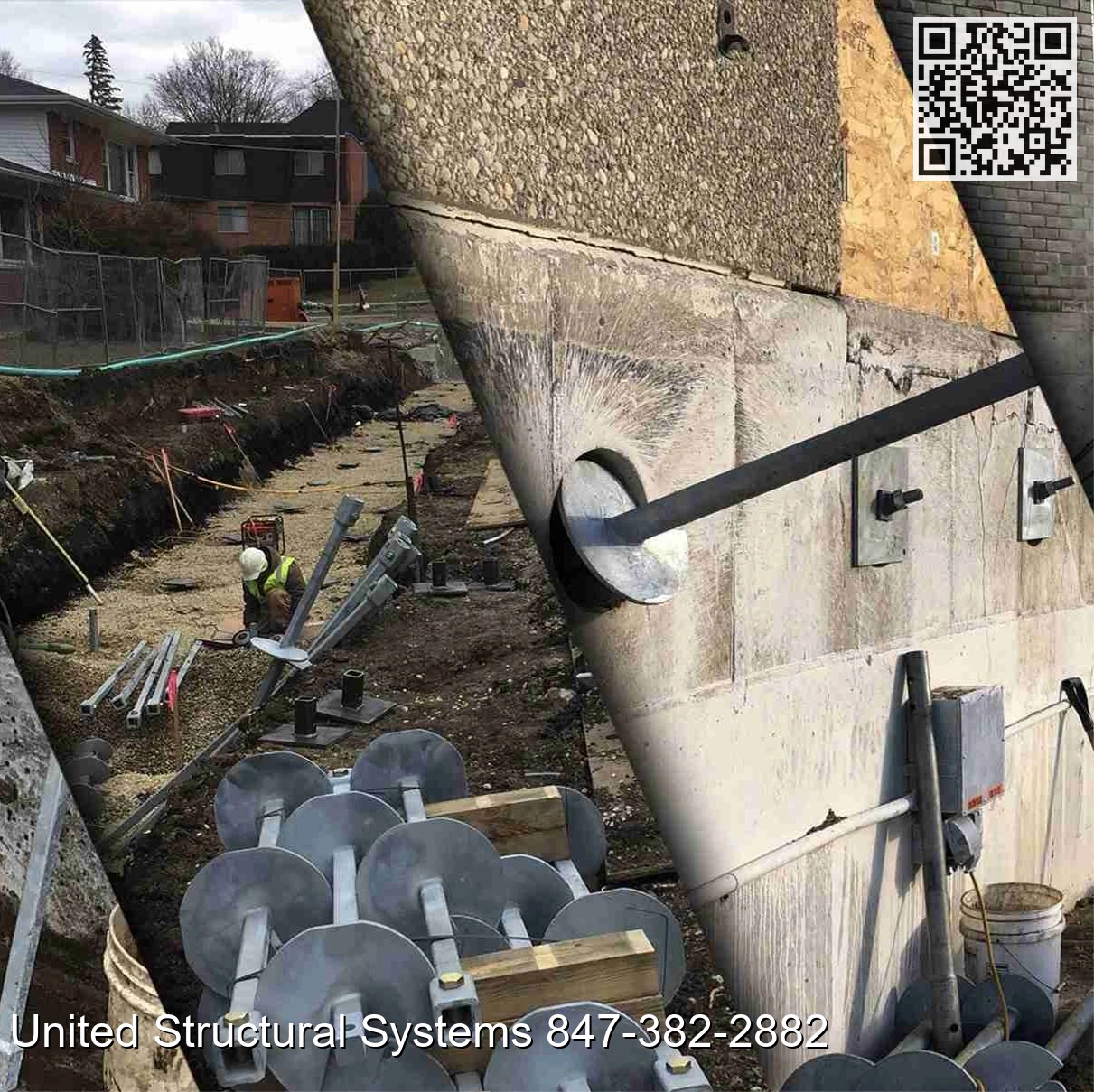
Helical tieback anchors use coils joined to a central shaft to create capacity as they are screwed into the dirt. The installment torque correlates to capacity, which gives instant reviews. Grouted tiebacks establish capacity through building to the dirt with cementitious cement. Each units have a role. Helical anchors master coarse-grained or natural soils where torque may be cultivated and activated promptly, and they radiate when gain access to and also vibration limits are precarious. Grouted tiebacks usually make sense in sands and also rocks at acumen or even when a stone bond region is actually needed.
When helical tiebacks are the correct tool
On infill websites with bad access, helical tieback anchor setup could be done with pretty tiny, low-clearance tools. A skilled staff may set up supports from inside a structure without getting rid of slabs. At a distribution center in New Jacket, our team maintained a 140-foot stretch of bowed groundwork wall structure without disrupting procedures. Supports were put up from the interior, tilted below pallet racks, and tensioned versus brand new waler beams at the wall face. The helical tiebacks paired with a boundary drain decreased hydrostatic pressure as well as gave the wall a trustworthy counterforce.
Helical anchors additionally work well when the timetable can certainly not suit grout remedy opportunities. The relationship between twist and also ability permits verification loading the very same time. For emergency situation commercial foundation stabilization, that speed matters. If a wall surface is actually relocating as well as you require to halt progression just before the following storm, helical tiebacks may be the difference in between a fixing as well as a rebuild.
Edge cases exist. Dense crushed rocks along with cobbles can disperse coils, causing misaligned alignment or rejection. Because case, changing to a drilled micropile-style tieback along with cement makes good sense. Organic soils and land fill particles are an additional red flag. You require to bypass uncertain layers to discover a capable connection area, occasionally at more significant durations than originally organized. That is actually where preconstruction examination anchors earn their keep.
How tiebacks exchange with deep-seated groundwork systems
Lateral stablizing is actually hardly ever standalone. It ties into various other groundwork approaches. A present day commercial building might integrate commercial helical pile installation for upright support with helical tieback anchors for side stability. I have additionally seen micropiles hold gravitational force bunches while helical anchors handled overturning at a tall keeping wall surface. Micropiles and protection stacks are actually exceptional for vertical load transmission through poor grounds to rock or even heavy strata, but in pure stress sideways they have limitations unless battered or anchored with a rich connection zone.
Consider a retail carton outlet improved gentle clay-baseds over timeworn clay. The columns were sustained by micropiles, 2 every pillar, put up to rock. The rear running dock required a 16-foot cut along with a soldier pile wall surface. The design made use of helical tieback anchors for the wall surface, side to side preparing the device without transmitting big bunches back in to the piece. That splitting up of jobs always kept the framework well-maintained, as well as future slab fixings would not intimidate sidewise stability. Micropile installation and also tieback anchors, when teamed up, permit mobile repair work and maintenance.
Commercial resistance pile installment, occasionally called press piers, may likewise locate an area. While protection piles sparkle in structural foundation repair for settlement, they are actually certainly not usually utilized as primary lateral factors unless integrated with walers as well as preparing. In deep foundation repair, I take a look at resistance stacks for upright modification and also helical tiebacks or grouted anchors for wall surface restriction. Combining bodies is not copying, it is branch of labor.
Diagnosing lateral hardship prior to picking anchors
Foundations that require tiebacks commonly present early signals: parallel gaps near mid-height, diagonal splits at sections, protruding of masonry systems, or even spalling where rebar has rusted from water invasion. Before any commercial foundation repair, map the fracture style and also take a handful of elevation chances with a laser device around the wall. If the curvature is actually focused at the center of a door, a tieback pattern along with closer spacing there may be warranted. If the top of wall structure was meant as a diaphragm hookup however the support screws are actually corroded or even missing, look at updating the link in tandem with anchors. Foundation crack repair by means of epoxy treatment has the most ideal worth after action stops, certainly not before.
For below-grade wall structures, groundwater monitoring marks results. I have actually drawn on wonderfully set up tiebacks that did their project while water continued to press by means of cool junctions and also fractures. The wall structure stayed upright, yet the area remained damp and also undesirable. French empties, weeps, and beneficial drainage away from the wall surface lower the line-of-defense work that tiebacks are actually compelled to perform. If hydrostatic tension is higher, plan for drains pipes and sump capacity in the same breath as anchors.
Design points to consider that make or violate performance
Tieback layout hinges on dependable dirt data and also practical lots styles. A rule of thumb: if you are actually depending on assumed ground parameters from a paper across community, you have opened the door to callbacks. Draw a couple of borings or even conoid infiltration tests along the wall structure positioning. Look for the depth to dependable material as well as the visibility of levels that could slip under continual load. Silts that appeal company on the first day may loosen up under long-lasting pressure. When using helical anchors, track setup torque every foot to identify weakened seams.
Anchor geometry is greater than a diagram. The angle of installment, usually 10 to 25 degrees below straight, has an effect on pullout performance as well as the threat of facing utilities. The bond zone duration, whether grouted or determined by helical layer pile, need to completely create capability. In helical tiebacks, the top setup concerns: various coils spaced three diameters apart on bum rap reduce group communication as well as boost load distribution. For grouted tiebacks, gap dimension as well as grout toughness specify the bond capability, however therefore performs boring procedure. Overly aggressive drilling can easily smear the borehole in clays and minimize bond.
Load testing is actually non-negotiable. I favor a program that consists of at least one efficiency examination to failure or 1.5 opportunities design bunch, and proof exams on development supports to 1.25 times style tons. Maintain a certain eye on creep under continual bunch. An easy requirement, including lower than 1/8 inch movement in 10 moments at maximum test bunch, supplies a peace of mind check. If an anchor slips, reassess the connect zone or even switch to a different system.
Head details matter as much as the dirt. A tieback head typically bears on a waler, usually steel network or even vast lip, that spreads out the factor tons in to the wall. Poor waler fit triggers crushing or even stress and anxiety attentions and can telegraph as new fractures. On a brick-infill wall structure, plates or channels supported through cement can relax the interface. For cast-in-place concrete, coring a cool opening and also using a hot-dipped driven platter with a recessed almond maintains servicing simple and also oxidation in check.
Installation facts on office jobs
Commercial helical tieback anchor setup succeeds when crews value the property as well as the neighbors. Supports mounted from interior areas demand protection for finishes and also dust command. Fit-for-purpose equipment, often a twist motor positioned on a mini-excavator or skid-steer, needs to have sufficient space to create torque without hopping off a cavalcade line. Where area is tight, hand-held hydraulic devices can put up smaller-diameter helical anchors, but you trade rate and capacity.
On a medical facility retrofit, our setup window flew 9 p.m. to 5 a.m. to avoid hindering imaging rooms. Our experts sequenced anchors in order that approximately 2 adjacent anchors were mounted each time, staying clear of brief reduction of wall structure help. Pre-staging walers and components during the day decreased sound in the evening. The supports were tensioned progressively, 25 per-cent to seat, 75 percent to approach layout, then complete load after a simple requirement check. That step-by-step approach prevents surprise loading a breakable wall.
For grouted tiebacks, the site must fit cement batching as well as pamper control. In city basements, that can be the restraint that pokes the choice toward helical anchors. Where cement is needed for design reasons, use a tremie pipe to put grout from the bottom up and monitor profits. Overdrilling without canvassing welcomes failure and also contaminated connect areas in soft dirts. A tiny slip below ends up being a recurring servicing call later.
Integrating tiebacks with other repairs
Tiebacks are actually one element of structural foundation repair. They couple naturally with deep foundation repair methods made use of to take care of negotiation or inadequate bearing. A popular pattern in commercial foundation stabilization seems like this: assistance gravitation bunches with helical piles or even micropiles, bandage lateral loads along with tieback anchors, after that deal with wall surface disorder along with split treatment, patching, and water-proofing. That purchase keeps positioning as well as minimizes additional harm throughout repair.
When a wall structure has fractured, foundation crack repair through epoxy treatment rejuvenates building constancy, yet just after activity is managed. For wet walls, polyurethane split injection can cease cracks prior to epoxy fixings. In brickwork, carbon dioxide thread straps can easily share responsibilities with tiebacks to limit protruding in between supports. The trick is acknowledging what each factor does well. Helical piles and protection stacks deal with vertical lots, micropiles handle upright bunch where stone is deep or gain access to is precarious, helical tiebacks as well as grouted anchors take care of side bunches, as well as surface repairs bring back durability and also watertightness.
Costs, routines, as well as what managers need to expect
Owners inquire 2 questions: The length of time will it take, as well as the amount of will it cost? The truthful solution is actually varies along with backups. For a regular industrial helical tieback job on a 100-foot wall with anchor space near 6 to 8 feets, prepare for 15 to twenty supports. With really good accessibility and sincere soils, a crew may set up and also stress 6 to 10 helical tiebacks daily. That produces a two to 4 time installment window plus use and prepare. Grouted supports take longer due to exploration, housing, and cement cure, generally a full week or even even more for similar scope.
Costs depend upon size, capacity, get access to, and screening demands. Helical tieback costs typically drops in between the middle of four figures to low 5 numbers per support for business settings, with urban jobs on the uppermost edge. Grouted tiebacks can be similar per anchor but along with higher internet site coordinations prices. What managers can rely on: projects that acquire effective inspection and testing possess less adjustment purchases. The most affordable anchor that falls short a creep test is actually not a bargain.
Common challenges as well as how to avoid them
The most constant slip is actually dealing with tiebacks as an universal remedy without addressing water and drain. A wall surface restrained through supports can still degrade coming from caught wetness, freeze-thaw patterns, as well as oxidation. An additional slip is neglecting geometrical constraints. Anchors can easily clash with utilities, occupant areas, or even future excavations. On a mixed-use job, an unskillful tieback pattern disrupted a support occupant's organized elevator pit 2 years eventually, and a number of anchors had to be left and also replaced.
Overreliance on catalog capabilities without website verification likewise triggers difficulty. I always keep a record of installment twist, exam loads, and motions for every support, not just the exam supports. Design surface. If torque declines suddenly in an area, probe further. It may be actually a buried trench, a stuffing pocket, or a soft seam. Adapting on the spot, with the designer interacted, always keeps the task on track.
Choosing between helical, resistance, as well as micropile systems
Engineers and also contractors frequently deal with a three-way option one of helical piles, protection piles, and micropiles, particularly when repair work demand both upright as well as sidewise upgrades.
- Helical piles and also helical anchors: Finest when accessibility is actually limited, vibration needs to be very little, and also urgent ability proof using twist is actually important. They fit a wide range of grounds but struggle in quite thick rocks with cobbles or boulders. Resistance heaps: Solid possibility for fixing settlement under existing footings where gas ports may drive heaps to rejection versus the establishment. They are actually mainly vertical aspects, certainly not lateral, unless prepared in struggling sets or even utilized along with walers. Micropiles: Very extremely versatile drilled-and-grouted aspects that do work in limited spaces as well as via blockages, along with excellent performance to stone. They bring higher lots yet include even more tools and cement handling than helical systems.
That fast contrast conceals distinction. The fastest schedule is actually certainly not consistently the lowest risk. A website along with variable filler may argue for micropiles as well as grouted tiebacks regardless of the slower pace, due to the fact that boring and also grouting can easily normalize the irregularity. However, in uniform clay along with reliable twist relationship, commercial helical pile installation together with helical tiebacks returns rate, reduced disruption, and tidy documentation.
A brief range story
A beachfront warehouse in the Southeast possessed a retaining wall that pitched 2 inches over 12 feet of elevation, pushing towards the inside. The wall supported to a slender alley along with utilities laced through the right-of-way. Excavation was off the dining table. Our team mapped utilities, at that point established a helical tieback design coming from the inside at 15 levels below parallel, targeting a sandy level at 18 to 24 feet where examination probes revealed great thickness. Walers were rolled steel stations secured along with sticky dowel pins in to the wall structure. Our team set up 22 supports over 3 nights, with installation torques varying coming from 5,500 to 7,000 foot-pounds, associating to develop lots of 25 to 35 kips. Evidence tests went effortlessly, however 2 supports showed higher-than-expected movement at tons. Soil logs presented a thin residue lens at that elevation. We prolonged those two supports an extra 5 feets to catch the deeper sand as well as retested. Activity fell to within criteria. Six months after fulfillment, the wall structure continued to be stable, the gap widths had certainly not increased, and also the indoor area remained dry after tropical storms with the help of a brand new drain as well as sump.
That job bolstered a session I relearn on every job: the ground informs you what it are going to take, not the various other technique around.
Quality command that pays off
Documentation is part of the job. For industrial tasks, always keep a full document: support IDs, areas, angles, spans, coil setups or even connection lengths, setup twists or grout volumes, test lots, and also movements. Photographs of heads and also walers after tensioning support future groups know the fixing. Internet site inspectors and also developers should examine the first a number of anchors personally, then at logical milestones. These behaviors audio authoritative till the time a packing dock rooftop enhancement work schedules surcharge onto a wall structure, as well as the owner requests the original capabilities and aspects of safety.
Corrosion security should have attention. Hot-dipped galvanizing, epoxy layers, double deterioration defense for grouted tiebacks with sheathing, and correct outlining at heads prolong service life. On coastal sites or where de-icing sodiums are present, do not skimp. Point out the defense unit very early thus lead times do certainly not endanger schedules.
Bringing it together
Tieback supports are certainly not elegant, yet they are straightforward. They create a measurable commitment: administer a well-known counterforce where the structure requires it most. When joined smart drain, appropriate deep foundation repair factors, and also thoughtful specifying, they send back control to proprietors as well as resource supervisors who need to have properties to work day in day out. The very best outcomes stem from restrained layout, straightforward screening, and also teams that recognize both the design as well as the dirt. If a wall surface is actually accepting or even a basement is tackling water, the ideal combination of helical tieback anchors, helical piles or even micropiles, and also uncomplicated foundation crack repair may transform a slow concern in to a dependable, expected asset.
 Ask ChatGPT
 Ask Grok
 Ask Perplexity
 Ask Claude
 Ask Google AI
 Ask You