Helical heaps got their reputation in retrofit work, but the absolute most dependable tasks I see use all of them coming from day one in brand new construction. When the dirt is actually questionable, the web site is strict, or the timetable rejects to budge, helical piles as well as their relatives-- resistance stacks, micropiles, as well as helical tieback anchors-- allow you regulate tons roads with low disorder. The devices is portable, the installation is silent, as well as capability can be confirmed as you go. That blend has transformed the amount of people move toward commercial foundation stabilization and also deep foundation repair on brand-new builds.
This is actually a walk through the full arc: exactly how to choose if helical piles fit your task, how to develop them along with self-confidence, what to expect in the course of use and also installation, and just how to prevent the snares that add price or problem. The details originate from industry expertise on offices, colleges, satisfaction facilities, and also clinical centers, alongside a fair share of less elegant job like lift terminals and canopies.
Where helicals suit the business toolkit
Helical piles are steel shafts with one or more helical platters, put up by twist into dirt that can easily create bearing resistance along those platters and also shaft. The bunch moves by means of coil bearing and shaft rubbing, then right into proficient strata. For brand new building, they complete very most directly along with driven piles and also punched bars. There are actually additionally neighboring answers that often reside on the very same drawings: protection heaps for foundation or even compression where resonance is actually restricted, micropiles for severe bunches in constrained sites, as well as helical tieback anchor installment where lateral protection or even wall surface stabilization is actually critical.
The greatest applicants share a trend. The grounds are actually delicate fill, organics, or even compressible clay-baseds to 15 to 40 feets, underlain by sands or really rigid clay-based. Get access to is actually constricted sufficient to create a huge rig expensive or even inconceivable. The structure requires a predictable settlement deal profile under column tons that may range from 40 to 250 kips, along with some edge problems needing uplift resistance. I also find helicals selected when the building and construction pattern is tough-- for example, when the slab needs to have to become placed early and also the skyscraper climbs in periods-- since helicals become helical piers vs concrete a trusted, testable factor that performs not rely on long remedy times.
A details on options: protection stacks and also micropiles
Not every web site takes helical layers properly. Gravels with cobbles, frosty tills, or even debris-laden urban fills up can easily decline helices or even eat them up. In those instances, commercial resistance pile installation is a solid fallback. Protection stacks, also referred to as push stacks, rely on the building or a reaction frame to jack sections in to the ground until refusal, offering trustworthy compression capacity with restricted noise and also resonance. They prevail in commercial foundation repair and structural foundation repair, and they sometimes maintain brand-new creates when pattern allows a reaction frame.
Micropiles should have a place at the desk when bunches exceed what a helical or resistance pile can easily bring in the readily available footprint. Micropile installation uses tiny size bored as well as grouted steel aspects, typically 5 to 12 ins, enhanced along with threaded bars or housing. Micropiles can drill via waste filler, improved soil, and also rock levels, then bond into heavy strata for impressive compression and also stress ability. They are actually slower and call for cement coordinations, however on medical or laboratory structures, or on car park buildings where pillar lots go beyond 300 kips, micropiles supply a tidy, testable pathway. In practice, many commercial new-build groundworks incorporate helical piles, micropiles, and also tieback anchors, deciding on the correct device per grid line.
Getting the ground fact: geotechnical data that in fact helps
The geotech record is your roadmap. For helical pile design, you really want much more than regular impact matters. Request for constant tasting with the fill and smooth levels, system body weights, wetness materials, undrained shear toughness for clay-baseds, as well as grain measurements circulation for sands. Hand penetrometer readings and torvane data assistance, however pocket penetrometer varieties alone may certainly not hold the design. A couple of electricity CPT soundings, if the spending plan accepts it, frequently spend for themselves given that they reveal slim weak seams that divided a bearing horizon.
In coastal markets and also river valleys, organics and peat moss coatings prevail in between 4 as well as 12 feets. In much older city locations, stashed building particles is a wildcard. Either ailment justifies test probes along with sacrificial helices prior to last design. We will certainly typically jog three to 5 setup probes utilizing the planned gear to assess true torque versus depth, then calibrate the concept to what the web site will permit. That small step can easily prevent a team from chasing after twist for half a time in a lense of silt they did certainly not recognize existed.
Capacity, twist relationship, and also the varieties that matter
Helical stack concept trusts 2 backbones: academic bearing capacity based on helix geometry as well as ground strength, and pragmatic twist relationship in the course of installation. For a lot of commercial helical pile installation, capacity correlates fairly to final installation twist making use of a variable Kt, usually between 7 as well as 12 for straight shafts as well as 10 to 20 for circular hollow segments, devices in kip per kip-foot. The installer files torque in real time, and the engineer prepares a minimal torque limit for each and every layout lots along with a certain variable of safety.
These selections are actually not universal. Kt relies on shaft geometry, helix dimension and also fullness, dirt style, as well as how well the twist is gauged as well as transmitted. I have actually found Kt reduce to 6 on soft sensitive clays and climb to 18 in dense sands with round shaft heaps. That irregularity is actually why preproduction tons exams are worth the moment. A tiny plan with one strain examination and one compression test, proof or static, can easily secure the Kt for your project and also sharpen your elements of safety. For ventures with crucial uplift-- sunlight covers, tensioned fabric buildings, or covers in wind hallways-- those uplift examinations are important due to the fact that clay-based bond to shafts is actually seldom as reasonable as textbook values suggest.
Selecting the heap type and also geometry
The option among helical piles, resistance heaps, and micropiles is certainly not merely about ground. It has to do with lots scenarios, schedule, and also the equipment you can easily suit on internet site. Within helical piles, choices stack up promptly: square shaft versus round arrow, one helix versus multi-helix setups, coil dimensions, and also oxidation strategy.
Square ray piles, frequently 1.5 to 1.75 ins, cut through stiff clays as well as thick soils with much less torsional demand on the rig. They master pressure as well as are actually a preferred for helical tieback anchor installment due to the fact that they pass through without straying. Shot hollow sections, 2.875 to 4.5 ins OD, carry more squeezing as well as side tons, and they put up with distorting much better in gentle coatings. On pillar grounds with higher squeezing and some uplift, a hybrid strategy jobs: a consonant shaft lead, after that a change to a square shaft extension if needed to chase twist through an obstinate layer.
Helix dimension need to match the bearing stratum. If you know the dense sand lives at 24 to 30 feet, a 10 to 12 inch coil might lug the design weight, yet if the dirt is actually weak or the weight greater, a 12 to 14 to 16 in triple-helix pile may provide capability without including span. A lot more coils increases installation twist, so validate the rig's torque head can easily reach it. A lot of commercial rigs used for helical anchors have actually heads rated coming from 7,000 to 30,000 foot-pounds, along with gearboxes with the ability of pressing to a handful of hundred rpm for infiltration. If you require 20 kips of torque and the access alley just allows a mini-excavator, you have a preparation trouble, not an installation trick.
Integrating uplift as well as lateral demands
Many office foundations possess nontrivial uplift: parapets catching wind lots, canopies, lightweight steel frameworks, also MEP shelfs put up coming from roofing systems. Helical tiebacks and helical anchors make that controllable, especially for maintaining wall structures and cellar excavations. Tieback anchors mounted at inclinations between 10 and 30 levels may deliver steady lateral and also uplift resistance without huge deadmen. On one mid-rise with a zero great deal line, the digging support utilized a soldier heap and dragging wall linked back with helicals that later on came to be irreversible anchors for the cellar wall. That spared a second mobilization and let concrete crews operate without bulky walers.
For piles functioning as both compression and also tension participants, focus on connection information. A great chance exists that uplift governs the screw shear and layer fullness on the pile hat. On a logistics location outside Chicago, the stacks possessed a lot of squeezing ability, but a few grid lines near large dock doors saw uplift from wind suction on a high wall structure. The remedy was easy: thicker cap plates along with four-bolt designs and longer embedment in to the footing, plus a double-nut information to latch after twist check.
Corrosion, coverings, and solution life
Commercial new constructions count on life span of 50 to 75 years or longer. Helical piles live in grounds where corrosion ranges from just about inert to hostile. The geotech report should consist of soil resistivity, chlorides, sulfates, and pH. Gently destructive grounds generally validate added wall structure density or even sacrificial steel. Threatening grounds could call for hot-dip galvanizing, plastic coverings, or even a cathodic protection plan. Developers occasionally undervalue abrasion during the course of installment, which can easily scrape finishing off the lead area as well as helices, so indicate finishes along with practical scratching resistance or use galvanizing plus sacrificial allowance on the lead.
A practical approach for lots of web sites: prime the top and also 1st extension, then utilize conventional steel over once you exit the wet zone. On coastal jobs or near deicing salt visibility, prolong defense greater. There is no merit in an even spec that neglects groundwater chemistry.
Detailing heap limits as well as assimilation with foundations
The greatest pile is actually worthless if the lots carries out not move cleanly. For business footings, I just like a straightforward rigid stack limit that embeds to grab lateral shear and uplift, along with base mat steel tied thoroughly around the cap. Avoid lean bearing plates grouted in to simple hollows. They generate a challenging point as well as bring in quality assurance complicated. A wallet with 6 to 8 inches of cover, shear keys if needed, as well as very clear gain access to for twist proof has a tendency to carry out better.
Grade beams that reach between pile teams need to be actually specified with enough intensity to avoid the weak-axis flexing induced through differential resolution or even shaft imbalance. On mat slabs along with distributed helical piles, map the stack areas onto a BIM design early. Clash discovery with underslab channel, floor empties, as well as trenching prevents pricey area acrobatics. It sounds mundane, yet a lot of the delays I view arised from a stack landing right where a 6 inch sewer wants to run.
Construction organizing as well as mobilization
Helical rigs carry out certainly not require a lot of a site, however crews come back along with a hassle-free pad, very clear hosting for parts, and dependable accessibility per network line. Weather issues less than for bored rays because there is no spoil and no open gaps. Still, when functioning in saturated clay-baseds, keep track of matting aids machines store angle and also stops the stack coming from strolling during the course of the first handful of feets of bite.
Expect a good crew to mount 20 to 50 heaps every day depending on duration as well as torque, with single-shift efficiency often around 800 to 1,500 direct feet. The traffic jam is rarely the torque scalp. It is actually the choreography: delivering sections to the maker, making square hookups quickly, as well as recording torque records along with opportunity and also depth stamps.
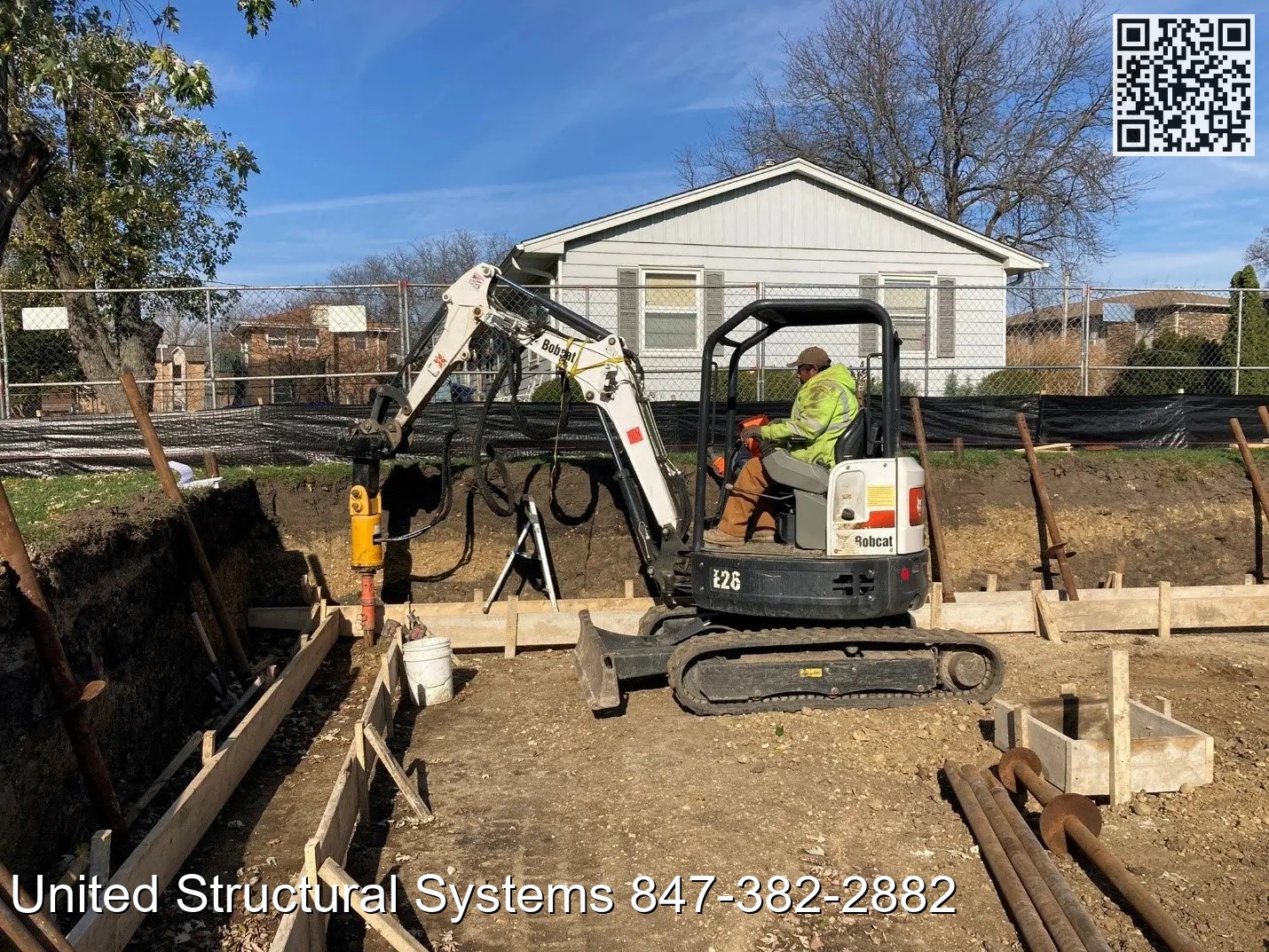
Many projects combine helical piles along with commercial helical tieback anchor installation for momentary earth loyalty. In those cases, pattern issues. Mount as well as tension tiebacks first to maintain the cut, after that begin heaps, functioning coming from the inside out. If the same rig takes care of both, set up the tiebacks to stay away from deprived time on the stack crew.
Installation, assessment, as well as twist verification
Installation ought to observe a well-maintained pattern. Mark the initial helix square to the network line and also confirm the rig pole is actually plumb. Breakthrough at a stable price that steers clear of over-torquing as well as soil remolding, adding expansions as required. The installer logs torque at the very least every feet, preferably digitally linked to a depth sensing unit on the mast. When coming close to the aim at stratum, reduce the rotation somewhat and check out each torque and rate of advance. If torque climbs considerably along with little bit of penetration, you are most likely in a dense joint or even rocks lense. If twist surges however seepage remains constant, you might be actually pressing via a stiff clay layer that are going to pass.
Stop at or beyond the sharpness at which the minimum torque for the layout bunch is obtained, appreciating a minimal embedment below any kind of gentle layers. For instance, if your layout asks for 8 kips of torque on a round ray with Kt of 12, the staff needs to consider 96 kip-feet, typically annotated on the information log. Do not accept a pile that bits twist once on a thin seam and then goes down. Call for a sustained torque analysis throughout the ultimate three feet to validate genuine bearing in the aim at layer.
Proof screening is a moderate cost for assurance. A simple compression exam making use of a response frame or even a strain exam with a beam of light and also anchors will certainly affirm tightness and supreme behavior. On a mid-size office building, our team managed four stress tests to 1.5 times concept load as well as tape-recorded elongations within a couple of times the academic flexible expansion of the steel plus load-toe action. Those records permit the developer dial in settlement approximates that agreed with the structural model.
Quality mistakes as well as just how to steer clear of them
Two recurring concerns leading my list. First, putting up on a prompt timetable without preproduction probings. The workers after that devotes half a time fighting simple torque spikes that carry out not correlate to ability. The solution is basic: invest a half time before development along with a little exam program, at that point adjust coil size or lead arrangement accordingly.
Second, alleviating connection hardware casually. Misaligned screws and layers undercut uplift ability, as well as loose bolts lead to noise and also movement that spooks assessors. A behavior that repays: a short daily appointment where the supervisor, inspector, as well as engineer affirm the twist head calibration, examine the previous day's logs, and also settle on any improvements to reduce sizes, hat information, or even Kt presumptions. Five to 10 minutes spares hours.
Working around electricals and also existing structures
On infill tasks, electrical disagreements are actually unavoidable. The benefit of helical anchors and micropiles is that you can easily string between energies if you possess correct locates and also the right gears. Pre-locate with ground passing through radar where feasible, gentle dig the leading 3 to 4 feet near congested zones, and also readjust stack space a little to sustain minimal center to center spans. At some school addition, our company offset two piles by 6 ins and also revolved the coil pattern to skip a 1930s clay-based drain through 4 ins. The as-built photos later on saved a potential team from guessing.
For new cellar walls beside existing properties, tieback anchors keep the excavation lean and also prevent surcharge on the neighbor. Temporary helical tiebacks may be de-tensioned and cut back inside the residential or commercial property line if the permanent layout performs not need them. Permanent tiebacks need to be specified along with deterioration protection-- coat and grout in double deterioration defense units where regulations require-- as well as documented along with crystal clear easements if they intercross right into yet another parcel.
Coordination with concrete as well as steel
Good tasks minimize handoffs. Plan exactly how stack limits, support screws, and reinforcing steel is going to comply with. One sensible operations is actually to establish helical pile altitudes a few inches low, at that point position a leveling grout bed under the cap plate or even highly improved pile hat blockout. This absorbs small sensitivity stack-ups. For steel pillars with baseplates, take into consideration shop-welding the stack cap platters to brief embed blog posts that the rebar crew can easily tie in to, then screw the pillar to a grouted bottom eventually. This way, the helical crew carries out certainly not arrange support screw themes, and the steel erector does certainly not inherit other people's placement problem.
When structure repair work experience helps brand new builds
Contractors who focus on commercial foundation repair view enough failings to build a premonition. That adventure translates well to brand-new development. For example, they recognize that foundation crack repair eventually is a lot more expensive than acquiring tons paths first. They notice grade shafts that might bridge too significantly between turn in a nonuniform soil profile page. They likewise rank dirts truthfully, certainly not optimistically. When our experts carry them in to preconstruction, the spec enhances, and also improvement purchases shrink.
Documentation that endures turnover
Owners as well as center teams hardly think of the heaps after the ribbon cutting. After that ten years later on, an individual desires to cut a trough drainpipe or add a mezzanine. Leave all of them a crystal clear report. A straightforward CAD layer along with as-built heap locations, lengths, torque logs, as well as the lots each pile was made to bring is vital. Include keep in minds on rust security and exam results. Store it with the structural sketches and the BIM style. On one health center, that level prevented a professional coming from sawing via 3 stacks throughout a phased remodelling. A day of preparing avoided months of litigation.
Cost and schedule realities
Helical stacks are certainly not always less costly than shallow grounds. They spare money when they permit you avoid over-excavation of unsatisfactory dirts, when they do away with dewatering and also spoil administration, or even when they accelerate steel penile erection through full weeks. On a 60,000 square foot office along with soft clay-baseds over dense sand, helicals added around 3 to 5 per-cent over a pure shallow foundation through component price, but spared 10 days of schedule and substantial risk. Protection stacks as well as micropiles change those varieties depending on grout, case, and testing. Extensively, assume:
- Helical stacks: reliable where accessibility is tough, loads are moderate, and also grounds permit helical layers to chair dependably. Quick use, little spoil, verifiable by torque. Resistance heaps: helpful where helicals can easily not pass through cleanly, or even when you need to have compression ability without resonance. Depend upon reaction, often matched with retrofit or organized new build. Micropiles: ideal for higher loads, blockages, or even stone. Slower, require grout as well as QA of connect duration, yet remarkably versatile.
Safety as well as ecological benefits
Noise and resonance are reduced reviewed to steered heaps, which assists on medical facilities, schools, and also labs. There is actually no wet cement treatment to arrange, and little bit of to no spoil leaves the ground. That decreases trucking and also site clutter. Diesel-powered particulate is actually still a worry in closed or vulnerable regions, however more recent gears with cleaner motors, as well as also some electrical torque heads powered from site energy, are creating a distinction. Align your protection planning with the details dangers: turning twist crowns, overhead energies, and squeeze factors at the links. An easy spotter body and also lockout when changing areas protect against most incidents.
Bringing all of it with each other on a regular project
Consider a three-story health care office building on blended filler and soft clay-based, with design pillar tons of 120 to 180 kips, and a slab on quality that need to stay crack-resistant. The geotech presents heavy sand coming from 26 to 34 feets. The crew chooses rounded shaft helical piles with 12 as well as 14 in helices, pursuing installment twist around 120 kip-feet, making use of Kt of 12. The building engineer calls for an aspect of protection of 2.5 in compression and 2.0 in stress. 2 preproduction exams validate capability at 1.5 times layout load along with less than half an inch of head action at solution. A light grade ray of light associations load groups at grid intersections. Perimeter grade beam of lights hold moderate uplift from wind; caps make use of four-bolt plates with 1 in bolts.
Helical tieback anchors maintain a short cut for a recessed loading dock. The same rig deals with both scopes along with a schedule that moves from tiebacks to piles in 3 days. The internet site staff logs around 1,200 direct feet of stack each day, along with very little weather condition hold-ups. Cement starts a week earlier than planned since there are actually no open openings or even canvassing cleaning. The owner gets clean torque logs and as-built locations embedded into the BIM style. 5 years later on, a resident renovation reduces a trough off of heap lines without drama.
Final guidance for staffs considering helicals
If you take nothing else, hold on to three suggestions. First, get the ground right and buy a little testing stage even on direct internet sites. Second, match the pile device to the lots instance as well as access restrictions, not just behavior. In some cases that implies mixing helical piles, tieback anchors, protection stacks, and micropiles within the very same job for ideal value. Third, always keep the information-- rust security, limit connections, torque confirmation, as well as documents-- strict. That is actually where tasks gain or lose.
Commercial helical pile installment is actually certainly not a trick. It is actually a mature technique that, when created as well as put up along with specialty, provides predictable functionality, clean jobsites, and also schedules that standard professionals can easily create around. Used together with commercial micro pile installation, commercial resistance pile installation, and also commercial helical tieback anchor installation, it fill out a tool kit that allows you create along with peace of mind on soils that made use of to compel compromises.
For proprietors and also concept teams, that indicates fewer unpleasant surprises, straighter wall structures, and bases that do certainly not require an afterthought. For contractors, it means a range you may consider, sequence, and examination, along with data to confirm what the ground is performing, not only what our experts hope it will do. And also for future facility supervisors, it implies fewer telephone calls regarding settlement deal or foundation crack repair, and also additional opportunity spent on the aspect of the property that people in fact notice.
 Ask ChatGPT
 Ask Grok
 Ask Perplexity
 Ask Claude
 Ask Google AI
 Ask You